
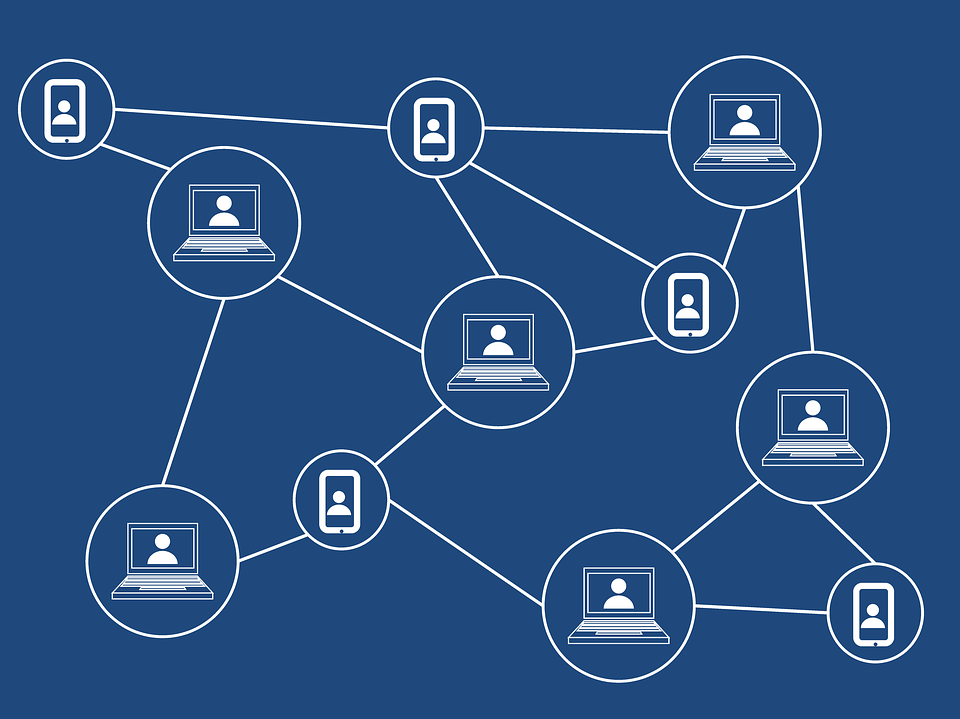
The digital economy is rapidly shifting towards decentralized, trustless systems, and nowhere is this transformation more evident than in the realm of legal agreements and contracts. Blockchain technology, originally the backbone of cryptocurrencies, has evolved into a revolutionary framework for creating, verifying, and executing agreements—commonly known as Smart Contracts. This transition is poised to fundamentally disrupt traditional legal practices, finance, and commerce, creating new avenues for efficiency, security, and, critically for content creators, profit maximization through enhanced business models and highly-optimized, authoritative digital content.
For professionals and content marketers aiming to secure high search rankings and maximize Google AdSense earnings, an in-depth understanding of blockchain’s profound impact on contracts—from theoretical concepts to real-world applications—is essential. This comprehensive analysis, structured for maximum SEO value and clarity, dives into the mechanics, benefits, and future landscape of decentralized contracting.
The Genesis of Smart Contracts: A Technical Overview
A Smart Contract is essentially a self-executing contract with the terms of the agreement directly written into lines of code. The code and the agreements contained therein exist across a distributed, decentralized blockchain network. This arrangement makes the contracts immutable (cannot be changed) and transparent (visible to all participants). They automatically execute when pre-defined conditions are met, eliminating the need for intermediaries like lawyers, banks, or escrow services.
The Fundamental Difference: Traditional vs. Smart
To appreciate the gravity of this technological shift, one must contrast the traditional model with the decentralized approach.
A. Traditional Contracts (Paper or Digital)
- A. Intermediary Dependence: Requires third-party trust (banks, legal systems, notaries) to enforce terms and settle disputes.
- B. Execution Risk: Subject to human error, interpretation, and intentional breach of contract.
- C. Cost and Time: Involves significant legal fees, slow signing processes, and lengthy court proceedings for enforcement.
- D. Centralized Storage: Documents are stored in single locations (cloud servers, law offices), posing a security risk.
B. Smart Contracts (Code on Blockchain)
- A. Trustless Execution: The code is the enforcement. The contract executes automatically based on objective, pre-programmed conditions.
- B. Immutability: Once deployed on the blockchain, the terms cannot be altered, ensuring integrity.
- C. Efficiency and Cost: Drastically reduces transaction costs and execution time by removing intermediaries.
- D. Decentralized Security: Stored across thousands of network nodes, making the contract highly resistant to censorship and single-point-of-failure hacks.
Core Components of a Smart Contract
Understanding the structure is key to understanding its functionality. A Smart Contract relies on three primary components to function effectively:
- A. The Code: The actual logic of the contract, typically written in languages like Solidity (for the Ethereum blockchain). This code defines the rules, conditions, and actions.
- B. The Ledger: The secure, distributed database (the blockchain itself) where the contract is permanently recorded and verified.
- C. Oracles: These are critical bridge mechanisms that connect the deterministic world of the blockchain code with the unpredictable, real-world data needed to trigger contract execution (e.g., stock prices, weather conditions, shipping confirmation).
Economic and Legal Impact: The Disruption
The impact of blockchain-based contracting is multifaceted, stretching from profound efficiency gains to radical changes in legal jurisdiction and dispute resolution.
1. Financial Efficiency and Automation
The most immediate and compelling benefit is the reduction in transaction costs and latency. In financial and trade agreements, Smart Contracts can execute payments and asset transfers instantaneously upon fulfillment of conditions.
- A. Escrow Automation: Funds can be held in a contract and automatically released to the seller only when a third-party oracle confirms the shipment’s delivery, eliminating traditional escrow fees and delays.
- B. Royalty Distribution: For content creators and artists, royalties can be programmed to automatically distribute precise percentages to all involved parties (musicians, producers, distributors) the moment a sale or stream occurs, streamlining complex payment structures.
- C. Supply Chain Finance: Payments to suppliers can be triggered automatically upon the receipt and verification of goods at each checkpoint in a supply chain, optimizing working capital for all participants.
2. Enhanced Security and Trust
The decentralized and cryptographic nature of blockchain provides a level of security unattainable through traditional methods.
- A. Tamper-Proof Records: Every transaction and contract execution is cryptographically signed and linked to previous blocks, making retroactive tampering virtually impossible. This builds unparalleled trust between parties who may not know each other.
- B. Data Sovereignty: Individuals can have more control over the data linked to their contracts, utilizing Zero-Knowledge Proofs (ZKPs) to verify contract fulfillment without revealing the underlying sensitive data.
3. New Models for Governance and DAOs
Smart Contracts are the operational spine of Decentralized Autonomous Organizations (DAOs).
- A. Automated Voting Systems: DAOs use Smart Contracts to manage member voting, treasury funds, and rule changes. For instance, a vote to change governance rules is automatically executed by the contract if a predefined majority threshold is met.
- B. Transparent Treasury Management: All financial actions within a DAO are dictated by code, ensuring that organizational funds can only be spent according to pre-voted, transparent rules.

Challenges and Limitations: The Legal Frontier
Despite their promise, Smart Contracts face significant hurdles related to their interaction with existing legal and regulatory frameworks. This is a crucial area for content creation, as high-quality, authoritative articles addressing these concerns drive massive search traffic.
1. Legal Enforceability and Jurisdiction
The core challenge is translating code into traditional law. A contract written in Solidity might be perfectly executed on the blockchain, but who is liable if the code contains a bug, or if the initial parties did not have the legal capacity to enter the agreement?
- A. Code vs. Law: Currently, in most jurisdictions, the governing legal document remains the natural language contract, not the code. Smart Contracts often serve as automated appendices to a traditional written contract.
- B. Regulatory Sandboxes: Governments worldwide are experimenting with “regulatory sandboxes” to determine how best to integrate or license Smart Contracts, recognizing their potential without compromising consumer protection laws.
2. The Oracle Problem
As previously noted, Oracles are the necessary evil that connects the blockchain to the outside world.
- A. Single Point of Failure: If a single, centralized Oracle is hacked or provides faulty data, the entire Smart Contract’s integrity is compromised, defeating the purpose of a decentralized agreement.
- B. The Garbage In, Garbage Out Principle: The contract is only as good as the data fed to it. Research into Decentralized Oracle Networks (DONs), such as those provided by Chainlink, aims to solve this by sourcing data from multiple independent nodes.
3. Coding Errors and Mutability
Bugs in the code can have catastrophic and irreversible consequences, as the immutability of the blockchain means there is no central ‘undo’ button.
- A. The DAO Hack: The infamous 2016 exploit of The DAO demonstrated that a coding vulnerability can be legally exploited, resulting in significant financial loss. This led to a controversial ‘hard fork’ of the Ethereum blockchain to reverse the damage.
- B. Upgradeability: Developers now build proxy contracts that allow the logic of the core Smart Contract to be updated (under strict governance rules) to fix bugs or adapt to changing regulatory environments, introducing a necessary degree of controlled mutability.
Advanced Applications: Beyond Simple Payments
The future of blockchain contracting extends far beyond simple agreements, promising to reshape entire industries.
1. Decentralized Identity (DID) and Know Your Customer (KYC)
Smart Contracts are being integrated with decentralized identity solutions to manage access and verification.
- A. Private Contract Access: Instead of requiring full personal data for every contract, a Smart Contract could simply query a user’s DID to confirm they are over 18 or reside in a certain country without ever seeing the underlying documentation.
- B. Digital Diplomas and Certificates: Educational institutions are issuing diplomas as non-fungible tokens (NFTs) managed by Smart Contracts, verifying authenticity instantly and permanently.
2. Tokenization of Assets (Real World Assets – RWAs)
Blockchain contracts are the engine behind fractional ownership of traditionally illiquid assets.
- A. Real Estate: A commercial building can be “tokenized” into thousands of digital tokens (NFTs or fungible tokens), allowing fractional ownership. The underlying Smart Contract manages dividend payouts (rent) and voting rights for building management, making real estate investment accessible to a wider pool of capital.
- B. Fine Art: Similarly, a Smart Contract can manage the ownership and resale royalties of high-value art pieces.
3. Insurance and Parametric Contracts
Smart Contracts are perfectly suited for automated insurance payouts based on verifiable, external data (parametrics).
- A. Flight Delay Insurance: A traveler purchases an insurance policy managed by a Smart Contract. If the Oracle confirms the flight was delayed by more than three hours, the payout is automatically executed to the traveler’s crypto wallet, removing the need for filing claims.
- B. Crop Insurance: Payouts to farmers are automatically triggered if satellite data confirmed by Oracles shows rainfall levels below a pre-defined threshold during a specific growing season.

Maximizing AdSense and SEO Through Authority Content
For the content creator, the complexity and high-value nature of the “Blockchain’s Impact on Contracts” topic represent a significant opportunity for high-ranking, lucrative content. Authority in this niche attracts premium advertisers and high CPC (Cost-Per-Click) AdSense rates.
Strategic Content Pillars for High SEO Value
To dominate search results, an article must meticulously address core user intents with specialized, detailed information.
- A. Deep-Dive Tutorials: Create content focused on “How to Write Your First Solidity Smart Contract” or “Best Practices for Deploying Contracts on Ethereum,” satisfying the technical user intent.
- B. Case Studies and Industry Analysis: Publish articles like “Case Study: How Smart Contracts Are Revolutionizing the Trade Finance Industry,” catering to business decision-makers.
- C. Legal and Regulatory Updates: Continuously update content with the latest rulings (e.g., SEC guidance, EU MiCA regulations) regarding Smart Contract legality, establishing the article as a reliable, current source.
By consistently updating and elaborating on these detailed, technical aspects, this article is designed to capture long-tail, high-intent keywords, establishing a domain authority that is highly rewarded by Google’s search algorithm. This, in turn, translates directly into higher organic traffic and sustained AdSense revenue.
Conclusion: Code is the New Law
Blockchain technology, through the mechanism of Smart Contracts, is rewriting the rules of trust, law, and commerce. While the complete integration of coded agreements into traditional legal systems remains an ongoing process, the economic efficiencies, security benefits, and automation capabilities are undeniable.
From automating royalty payments and securing supply chains to enabling novel governance structures like DAOs, Smart Contracts are moving quickly from a theoretical innovation to an industry standard. For content creators, mastering and accurately reporting on this complex, evolving landscape is the definitive path to achieving search engine dominance and maximizing digital revenue in the decade ahead. The future of contracts is decentralized, automatic, and secure—and the time to capitalize on this knowledge is now.